


Hemorrhoidal Embolization in Orange County
Hemorrhoids can make everyday moments uncomfortable, from sitting at your desk to simply going to the bathroom. If you’re dealing with bleeding, itching and irritation from hemorrhoids that just won’t go away, you’re not alone, and more importantly, you have real options.
Hemorrhoid embolization is a minimally invasive treatment that reduces blood flow to internal hemorrhoids, causing them to shrink without surgery.
At Orange County Hemorrhoid Clinic, our team is led by a board-certified colorectal surgeon and a board-certified interventional radiologist, giving you access to the complete range of treatment options and a unified approach to hemorrhoid care.
What Are Hemorrhoids?
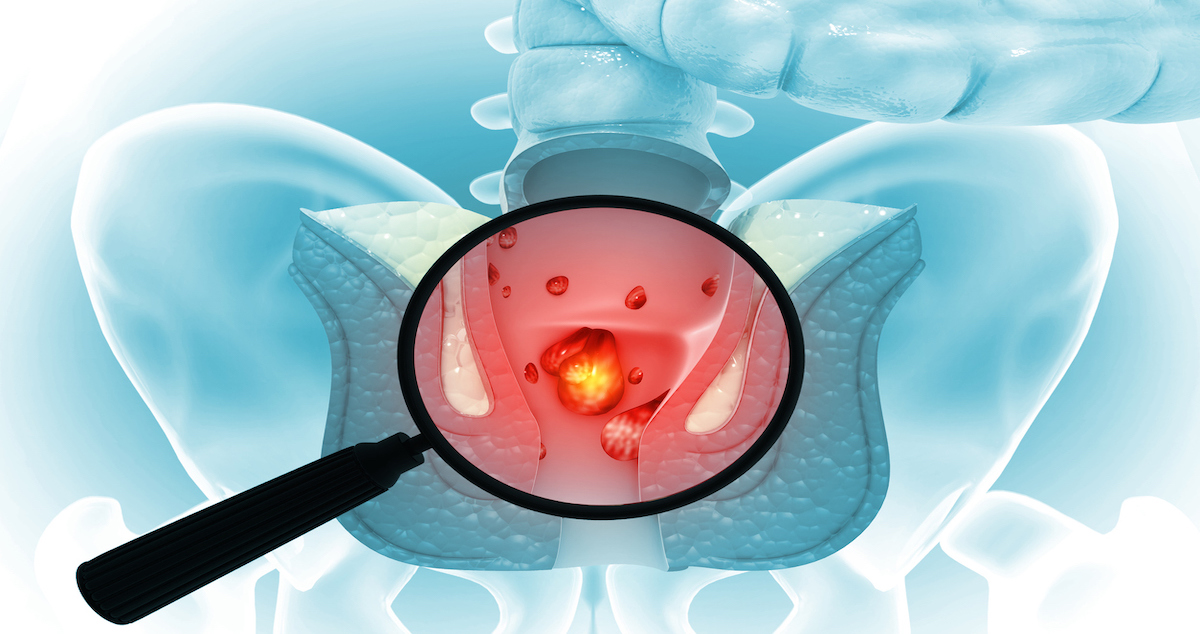
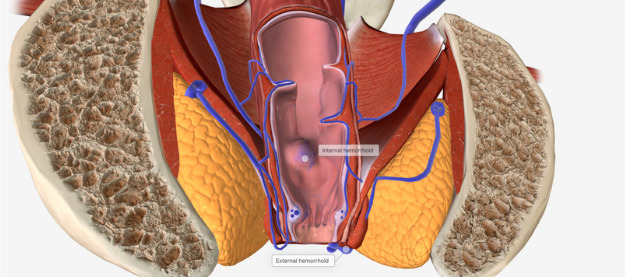
Hemorrhoids, or piles, are swollen and inflamed veins in the anus and lower rectum. They develop when pressure causes the veins to swell, often from straining during bowel movements. Chronic constipation is a leading cause of hemorrhoids, but obesity, prolonged sitting, increased pressure on the pelvic veins during pregnancy, and frequent heavy lifting also contribute.
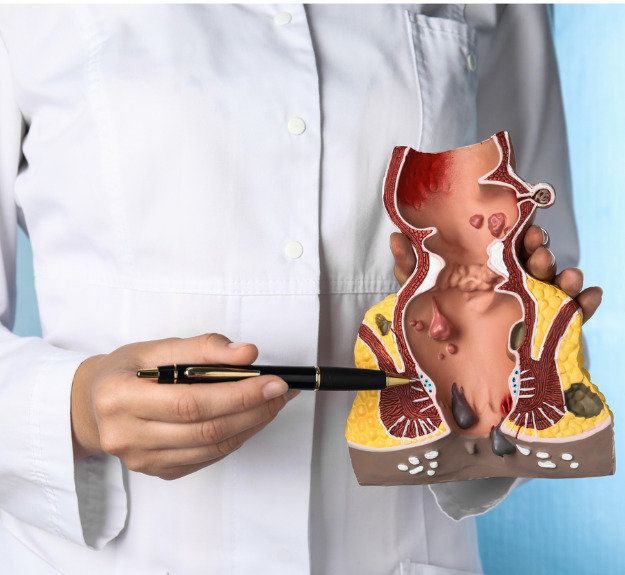
Hemorrhoids can be internal or external. Internal hemorrhoids are classified into four grades depending on their size, severity and whether they bulge outside the rectum (prolapse):
- Grade 1: May bleed but do not prolapse
- Grade 2: Prolapse during straining but retract on their own
- Grade 3: Prolapse during straining but can be repositioned manually
- Grade 4: Permanently prolapsed and cannot be pushed back in
Internal hemorrhoids are generally painless but tend to bleed. They may become itchy or uncomfortable when they protrude outside the anus, especially when sitting or passing stool.
What Is Hemorrhoid Embolization?
Hemorrhoid embolization, also called HAE or “the emborrhoid technique,” is a minimally invasive procedure that treats internal hemorrhoids by reducing blood flow to the affected tissue. A board-certified interventional radiologist guides a small catheter through an artery in the wrist or upper thigh, then delivers tiny particles into the arteries supplying the hemorrhoids.
Without that excess blood flow, the hemorrhoidal tissue gradually shrinks and symptoms resolve, with no tissue removal, no general anesthesia and no overnight hospital stay.
HAE is performed on an outpatient basis. Most patients go home the same day and return to normal activity within a few days.
Who Is a Good Candidate for HAE?
HAE is most effective for patients with symptomatic grade 1, 2, or 3 internal hemorrhoids who have not found lasting relief through dietary changes, sitz baths, stool softeners, over-the-counter ointments and other conservative treatments.
You may be a strong candidate for HAE if:
- You have internal hemorrhoids that itch, bleed or cause discomfort
- Conservative treatments have not provided lasting improvement
- You want fast, targeted relief without surgery
- You prefer to avoid large incisions, general anesthesia and a long recovery
HAE may not be appropriate for patients with Grade 4 prolapsed hemorrhoids, a history of colorectal surgery, severe inflammatory bowel disease or allergies to contrast dye. A consultation will determine whether HAE or another treatment is the right fit for you.
What Happens During the HAE Procedure?
Hemorrhoid embolization is an outpatient procedure performed under mild sedation, often called "twilight" sleep, to keep you comfortable throughout. Here's what to expect:
- Access: A small catheter is introduced into an artery at the wrist or upper thigh through a tiny puncture.
- Navigation: Using real-time X-ray imaging, the catheter is guided to the superior rectal arteries that supply blood to the hemorrhoidal tissue.
- Embolization: Tiny particles or microcoils are deployed to reduce blood flow to the targeted hemorrhoidal branches.
- Completion: The catheter is removed, and a small bandage is placed. The entire procedure typically takes approximately two hours.
Because there is no direct trauma to the anorectal tissue, patients typically experience significantly less pain than they would after surgery or trans-anal procedures. Since no tissue is cut or removed and your anatomical integrity is fully preserved, continence is not affected.
What Is Recovery Like After HAE?
Recovery from hemorrhoid embolization is straightforward for most patients.
- Day of Procedure: You'll spend a brief period in recovery before heading home the same day. Some patients experience mild pelvic pressure or a crampy sensation, which typically responds well to over-the-counter pain relief.
- Days 1–3: Take it easy. Drink plenty of fluids, use stool softeners as directed to prevent straining, and avoid heavy lifting or strenuous activity. Most patients manage comfortably at home.
- Weeks 1–4: The hemorrhoidal tissue gradually shrinks as blood supply decreases. Bleeding typically improves within the first few weeks. Many patients report noticeable symptom relief during this window.
- 1–3 Months: Full results continue to develop as the tissue resolves. Follow-up imaging may be used to confirm blood flow reduction in treated arteries.
The majority of patients return to desk work within a few days of the procedure. If your job is physically demanding, our team will provide guidance on when you can resume heavy lifting, bending and other strenuous activity.
All Hemorrhoid Treatment Options at Orange County Hemorrhoid Clinic
HAE isn't right for everyone, and that's exactly why we offer the full spectrum of hemorrhoid treatments under one roof. Dr. Gene Syn, our board-certified colorectal surgeon, and Dr. Kevin Burns, our board-certified interventional radiologist, work together to match each patient with the most appropriate, effective solution for their specific situation.
Hemorrhoid Banding (Rubber Band Ligation)
A small rubber band is placed at the base of an internal hemorrhoid, cutting off its blood supply. The hemorrhoid withers and falls off within about a week. Banding is one of the most widely used non-surgical treatments for internal hemorrhoids and is effective in approximately 80% of patients. It does not require general anesthesia and can be completed in minutes.
Best for: Grade 1–3 internal hemorrhoids; patients who want a quick, office-based procedure with immediate results.
Infrared Coagulation (IRC)
A small probe delivers infrared light above the hemorrhoid, creating scar tissue that cuts off its blood supply. IRC is well-suited for smaller hemorrhoids and typically takes less than ten minutes per session. Multiple sessions may be needed for complete removal.
Best for: Small to medium internal hemorrhoids; patients who want a low-risk, minimal-discomfort in-office procedure.
Heat Energy Therapy (HET™)
A state-of-the-art bipolar system applies low-grade heat energy to the tissue adjacent to the hemorrhoid, minimizing blood flow and reducing inflammation. HET requires only one session and allows patients to return to normal activities immediately.
Best for: Grade 1–2 internal hemorrhoids; patients seeking a single-session, same-day return-to-activity treatment.
Transanal Hemorrhoidal Dearterialization (THD)
A Doppler-guided procedure that uses suture ligation to restrict the arterial blood supply to hemorrhoids. No tissue is removed and sutures are absorbed by the body over time. THD takes approximately 20 minutes and is performed under sedation in an outpatient setting.
Best for: Internal hemorrhoids not relieved by conservative options; patients who want a tissue-preserving, low-pain procedure.
Hemorrhoidectomy
The surgical removal of hemorrhoidal tissue. Hemorrhoidectomy is the most effective treatment for severe or recurring hemorrhoids and can address both internal and external piles. It requires either general anesthesia, local anesthesia or spinal anesthesia for comfort and involves a longer recovery period (typically two to four weeks), but offers the highest long-term resolution rates for advanced cases.
Best for: Grade 3–4 hemorrhoids; cases involving significant prolapse, external hemorrhoids, or failure of other treatments.
Comparing Hemorrhoid Treatments: Which Option Is Right for You?
| Treatment | Type | Anesthesia | Recovery | Best-Suited | Advantages |
|---|---|---|---|---|---|
| HAE | Minimally invasive | Mild sedation ("twilight") | 2–3 days | Grade 1–3 (internal) | No anorectal incision; preserves tissue; very low pain |
| Hemorrhoid Banding | Non-surgical (office-based) | None | 1–2 days | Grade 1–3 (internal) | Fast, effective for ~80% of patients |
| IRC | Non-surgical (office-based) | None | Minimal | Grade 1–2 (internal) | Minimal discomfort; low risk; under 10 minutes |
| HET™ | Non-surgical (office-based) | Mild sedation ("twilight") | Same day | Grade 1–2 (internal) | Single session; immediate return to activity |
| THD | Minimally invasive | Mild sedation ("twilight") | 1–2 weeks | Grade 2–3 (internal) | No tissue removal; Doppler-guided precision |
| Hemorrhoidectomy | Surgical | General, spinal or local | 2–4 weeks | Grade 3–4 | Most definitive; addresses internal & external hemorrhoids |
Why Choose Orange County Hemorrhoid Clinic?
We offer a complete range of hemorrhoid treatments under one roof, from surgical interventions to the most advanced minimally invasive techniques available.
Two board-certified physicians offer complementary expertise. Dr. Gene Syn is a fellowship-trained colorectal surgeon with 20+ years of experience in surgical and procedural hemorrhoid care, while Dr. Kevin Burns is an interventional radiologist and a leading authority in minimally invasive hemorrhoid treatments.
You'll get personalized care tailored to your situation, not a templated treatment plan. If HAE is your best option, we'll tell you. If a simpler in-office procedure will solve your problem just as effectively, we'll tell you that, too.
We accept most PPO insurance plans and Medicare. Our friendly team is happy to verify your coverage, assist with preauthorizations and help you navigate the insurance process.
We have three convenient locations across Orange County: Lake Forest, Irvine, and Mission Viejo. Find the advanced care you need close to home so you can get back to the activities you love sooner.
Hear From Our Patients
“About as smooth and comfortable of an experience as could be hoped for dealing with an uncomfortable condition. I would recommend Dr. Syn and this office without hesitation.”
— Adam F.
“Dr. Syn has been amazing. He has thoroughly explained the process allowing me to make an informed decision. I went through 6 months of excruciating pain daily prior to my surgery and it all went away 3 days after surgery. Posting this one month post op and I feel great. I would highly recommend Dr. Syn.”
— Clint S.
“I had a fantastic experience [with the] doctors office and staff here in Orange County. The level of care and professionalism was outstanding. . .I received the help I needed to find relief quickly, which made a huge positive impact on my quality of life, including allowing me to enjoy a recent trip to Hawaii.”
— Markell B.
FAQs About Hemorrhoid Treatment
Do hemorrhoids go away on their own?
Sometimes, yes. Mild or low-grade hemorrhoids often resolve on their own within a few days, especially with increased fiber intake, adequate hydration and topical ointments or creams that constrict the blood vessels to shrink hemorrhoid tissue. However, hemorrhoids that are more severe, recurring or prolapsed are unlikely to resolve without treatment.
When should I see a doctor about my hemorrhoids?
You should see a specialist if your symptoms persist for more than a week despite at-home treatment, if you're experiencing bleeding or if discomfort is affecting your daily life. Rectal bleeding should always be evaluated by a physician. While hemorrhoids are the most common cause, bleeding can occasionally indicate something that warrants further investigation. The earlier you're evaluated, the more treatment options are typically available to you.
What kinds of doctors treat hemorrhoids?
Hemorrhoids are most commonly treated by colorectal surgeons (proctologists) and, for minimally invasive and non-surgical options like HAE, interventional radiologists. At Orange County Hemorrhoid Clinic, patients have access to both a board-certified colorectal surgeon (Dr. Gene Syn) and a board-certified interventional radiologist specializing in non-surgical hemorrhoid care (Dr. Kevin Burns), which means every treatment pathway is available in one place.
Who performs hemorrhoid embolization at Orange County Hemorrhoid Clinic?
HAE is performed by Dr. Kevin Burns, a board-certified interventional radiologist with specialized training in image-guided procedures. Dr. Burns trained at Brown University, NYU School of Medicine, Montefiore Medical Center, and completed advanced IR training at MD Anderson Cancer Center.
What is the difference between HAE and THD?
Both procedures reduce blood flow to hemorrhoids without removing tissue. The key difference is in approach: THD is a transanal procedure performed with a Doppler-guided anoscope and suture ligation from inside the rectum. HAE is a vascular procedure performed through a catheter in the wrist or thigh. HAE tends to involve less post-procedure pain and a shorter recovery.
Can hemorrhoids come back after embolization?
As with any hemorrhoid treatment, recurrence is possible, particularly if contributing factors (such as chronic straining or a low-fiber diet) are not addressed. A small percentage of patients may require a repeat procedure. Your care team will discuss realistic expectations and long-term management with you at your consultation.
Will I need to take time off from work after hemorrhoid embolization?
Most patients return to desk work and light daily activity within two to three days of HAE. Because the procedure involves no tissue removal and is performed under mild sedation rather than general anesthesia, recovery is considerably shorter than after surgical hemorrhoidectomy.
Explore Your Options at Orange County Hemorrhoid Clinic
Hemorrhoids are common. Putting up with them doesn't have to be. Whether your symptoms are mild and recurring or severe and affecting your daily routine, there's a treatment that fits, and finding it starts with one appointment.
At Orange County Hemorrhoid clinic — part of Minimally Invasive Medical Group — our team of skilled professionals provide compassionate care and lasting relief. Contact us today to schedule a consultation and learn more about how hemorrhoid embolization can transform your life for the better.
Call us at 949-239-1126 or start the booking process online. We see patients at our Lake Forest, Irvine and Mission Viejo locations, Monday through Friday, 9:00 a.m. to 5:00 p.m.